


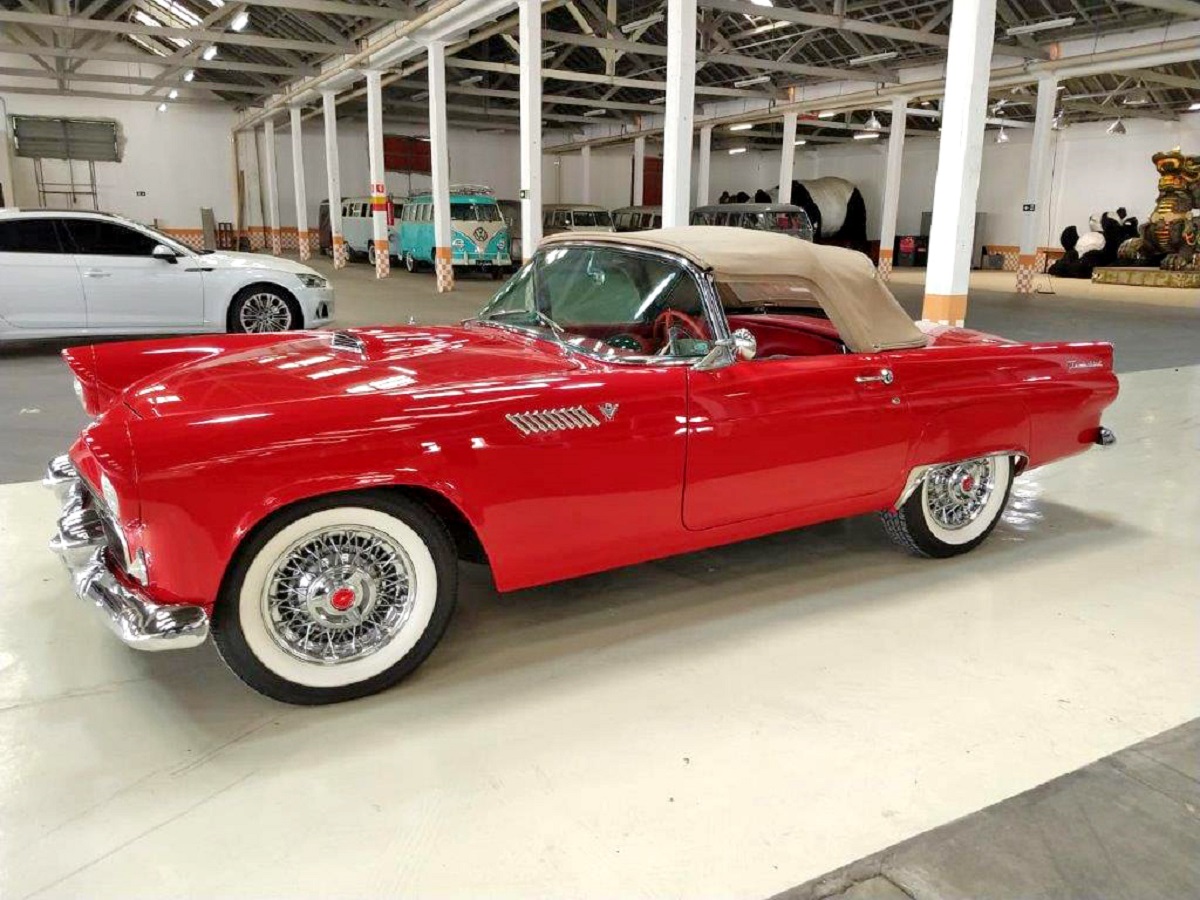
The first generation of the Ford Thunderbird is a two-seat convertible produced by Ford for the 1955 to 1957 model year, the first 2-seat Ford since 1938.
It was developed in response to the 1953 Motorama display at the New York Auto Show, which showed the Chevrolet Corvette. The Corvette in turn was developed in response to the popularity of European sports cars among Americans.
Dubbed a "a personal car of distinction" by Ford, this appellation was also used by the motoring press at the time.The car built upon the heritage of the bespoke roadsters of the 1930s, yet was constructed largely of existing components, marking the first step toward the evolution of the personal luxury car as a mass market segment in the United Stat While light weight for its era and fitted with a standard V8 engine, the Thunderbird focused more on driver comfort than speed, and was not a direct rival to either the Corvette or European sports cars The Thunderbird proved more suited to the American market than the Corvette, with sales of 16,155, versus 674 Corvettes in 1955. This remained the only two-seat convertible Thunderbird until the eleventh-generation was unveiled in 2002.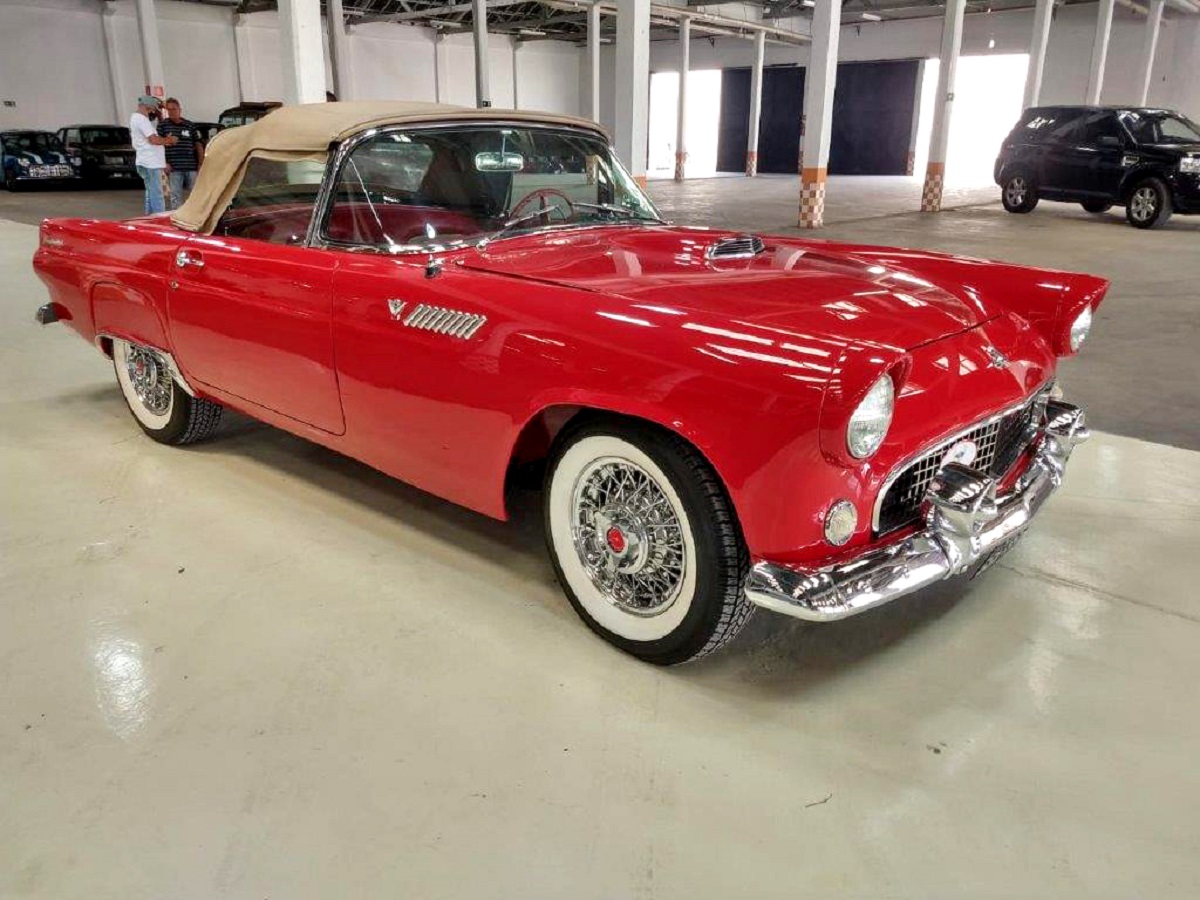
1955 Ford Thunderbird
Ford unveiled the Thunderbird at the Detroit Auto Show on February 20, 1954. The first production car came off the line on September 9, 1954, and went on sale on October 22, 1954 as a 1955 model, and sold briskly; 3,500 orders were placed in the first ten days of sale. While only 10,000 were planned, 16,155 cars were sold in 1955.
The Thunderbird came with fender skirts and a removable fiberglass top as standard equipment, with a fabric convertible top as a commonly specified option. The engine was Ford's 292-cubic-inch OHV 292 Y-block V8, which got 18MPG of fuel economy. The exhaust pipes exited through twin bumper guards bolted to the rear bumper.
The car used existing chassis and suspension design and off-the-shelf Ford mechanical components. It was constructed using a body-on-frame technique utilizing a version of the standard Ford design cut-down to a 102-inch wheelbase identical to the Corvette's.
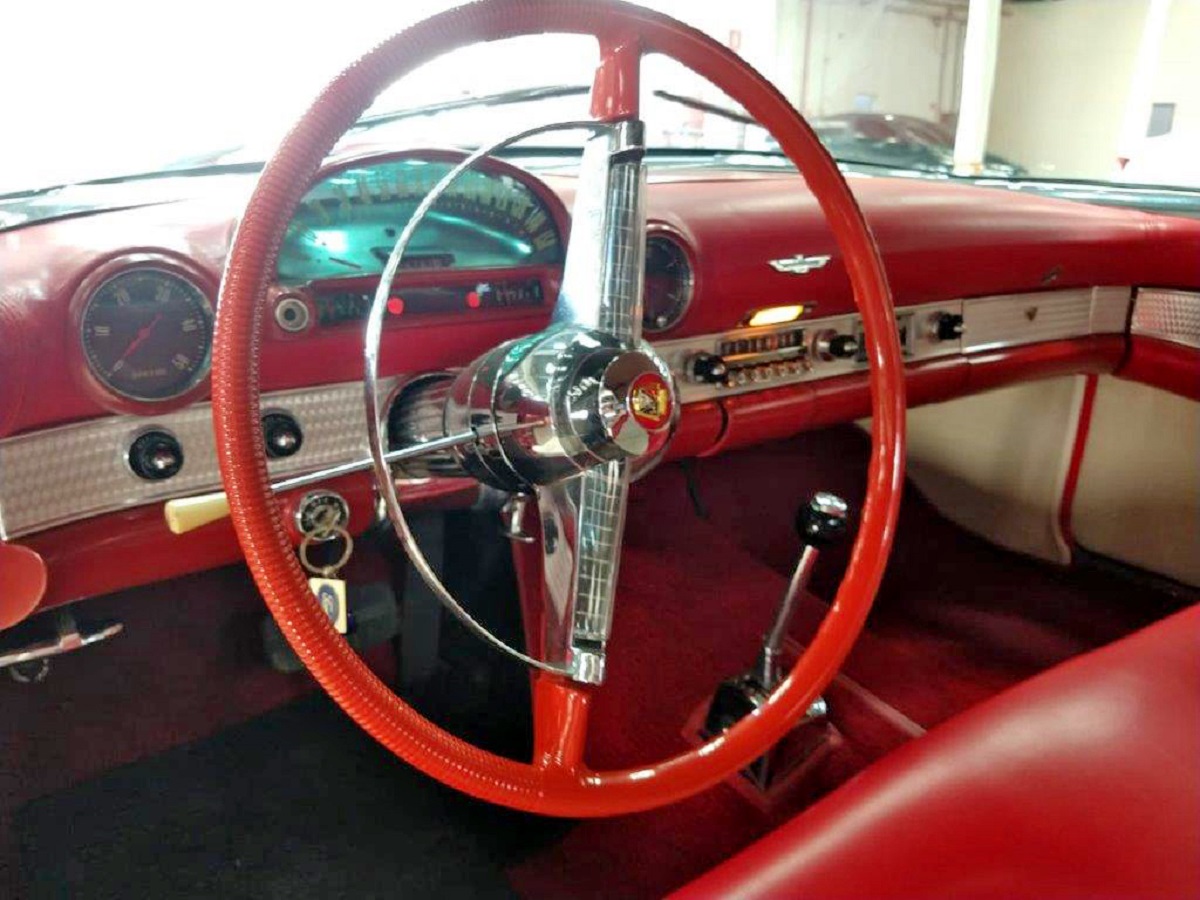
The engine was paired either with a Fordomatic automatic or manual overdrive transmissions, and the car featured four-way powered seats and pushbutton interior door handles. Other unique features were a telescoping steering wheel and a tachometer.
A rare domestic two-seater for the era, it was designed to be a brisk luxury tourer and not a sports car, capable of attaining speeds of 100 to 115 mph (161 to 185 km/h) depending on the transmission ordered.



























































































































































































 LINKS E SITES IMPORTANTES


