


Ford's popular coupé took its time to earn its place as a collector car, but it never fails to have a legion of followers, who worship its qualities and ignore some limitations.
On paper, Capri had what it took to be a great commercial success, a goal easily achieved, as in two years it sold more than 400,000 units.
It was born to be an affirmation car for young customers, who needed a reliable and accessible vehicle, but who wanted to distance themselves from the “square” image of a saloon.
The Ford Cortina was a European family car, like the Ford Falcon in the United States. The Capri would then be the Mustang of Europe, the “pony” car, sporty looking but very rational under the seductive lines.
Capri was produced in England, Belgium and Germany, but the country of origin influenced some different skills. The range was very wide, and in the 1 series, which is the subject of this article, twelve different engines were available.
On the English side we had the Kent engines, 1.3 and 1.6 liters, the Essex 2.0, 3.0 and 3.1 liters. On the German side, the Taunus engine range ranged from 1.3 to 1.7 liters, and the Cologne V6 from 2.0 to 2.6 liters. It also adds the Pinto 2.0 liter engine.

In addition to these dozen options, the outlaw of history also appeared, the 5.0 liter Windsor V8 engine, used in South Africa to make the formidable Capri Perana.
Note that the engine architecture itself was also diverse, with four cylinders in line (Kent and Pinto) and in V (Taunus, Cologne and Winsor).
Returning to the more affordable models, in Portugal the most common were the 1300 and 1600, with some 1700 GT. Six-cylinder models were considerably rarer, but some did end up here, particularly the 3000 GT. A powerful car for the time and the most affordable on the market with an advertised top speed of 200 km/h.
The really sporty versions were the 2600 RS, with an aluminum cylinder head made by Weslake, and the RS3100, both of which gave rise to winning competition cars.
Image result for ford capri
Values still accessible
In Portugal, the most common are the 1300 and 1600, in their various specifications, from the 52 hp (DIN) to the 80 hp of the 1600 GT. In the market, its state of conservation is more important, as a restoration quickly surpasses the commercial value.
Values between €6,000 (1300) and €8,000 (1600 GT) will be suitable for very good specimens.
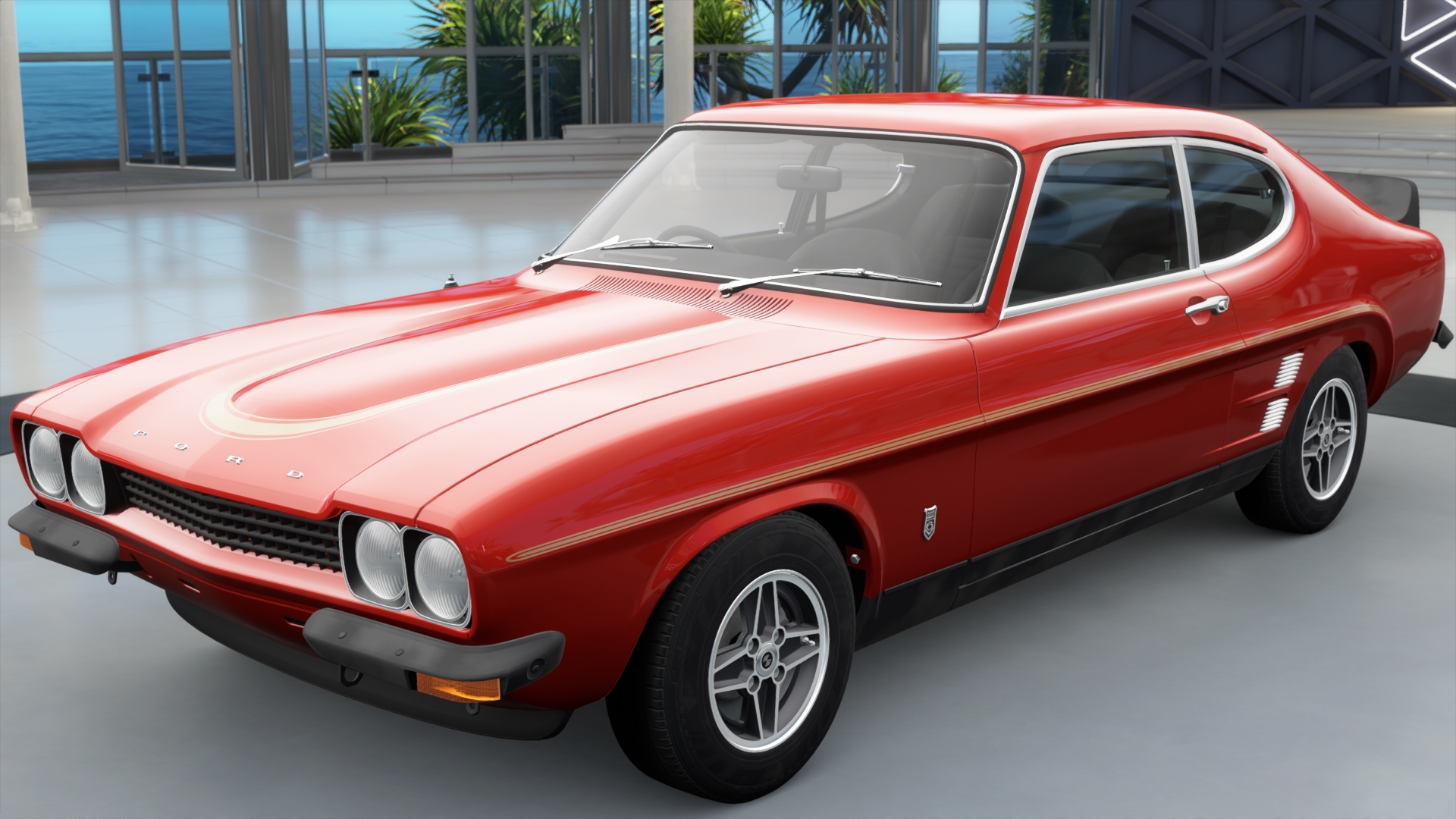
The 1700 GT XLR, with the sporty look that includes matte black hood and rostyle wheels, is priced a little higher, at around 9,500 euros.
From here it's always uphill, with the 2000GT worth €10,500. One of the most balanced models is the 125 horsepower 2300GT, whose value can reach €17,000. The 3000 GT, with 138 horsepower, is around €24,000, the less interesting 3000E is at €19,000.
The sports versions speak another language, more similar to the one used on Wall Street. Ten years ago you could buy a 2600RS for €20,000, but now double that is not enough for a good copy. There is no market below €45,000. The 3100RS is rarer, but its value is not higher, being more sought after in the English market.
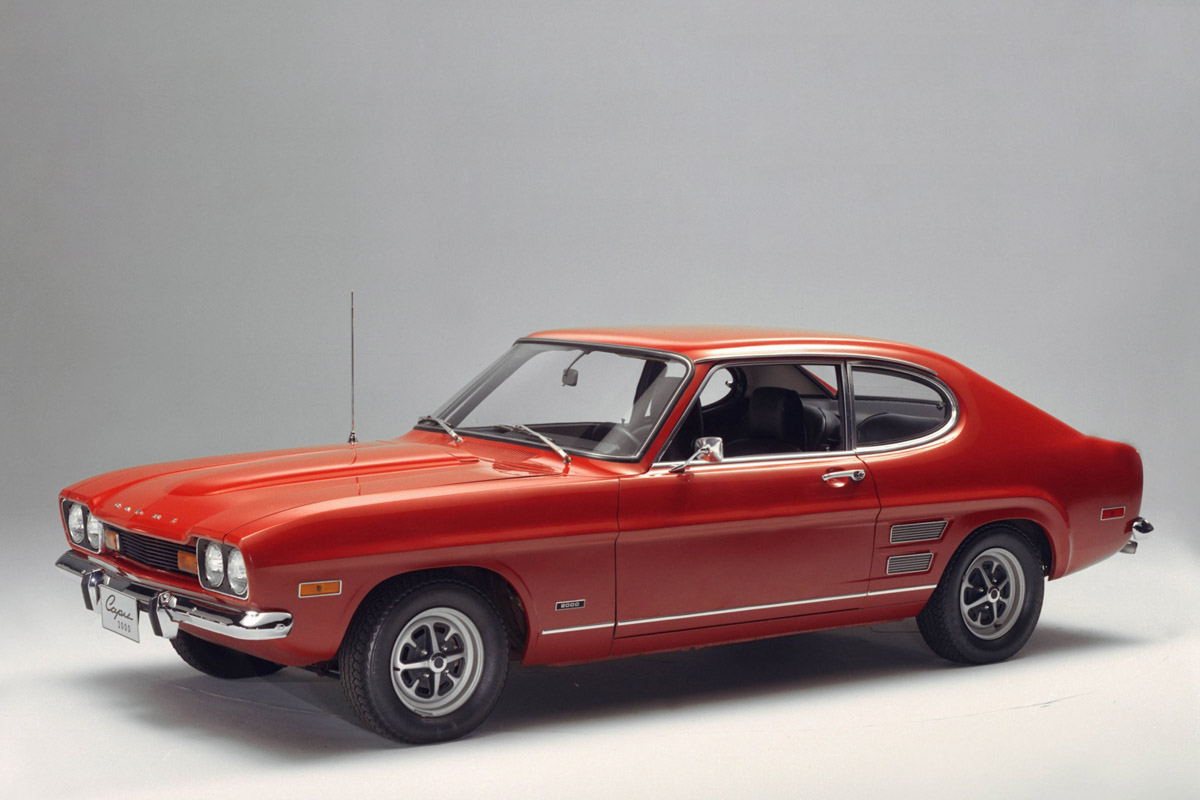
The 2 and 3 series extended the Capri's life until 1987, despite its best year being 1973. The last series, especially with the 2.8 models with injection engine, continued the tradition of offering good performance and fun handling in return. of a reduced investment. Very few came to Portugal at the time. Despite remaining very affordable, import costs in our country end up making their acquisition unfeasible.


 LINKS E SITES IMPORTANTES


